Cannes gave it a prize it had to share
The film that confused a television network in 1999 arrived at Cannes in 2001 as a finished feature and left with half a prize. The other half went elsewhere. The full consensus took another twenty years.
01 A split decision, then a slow climb
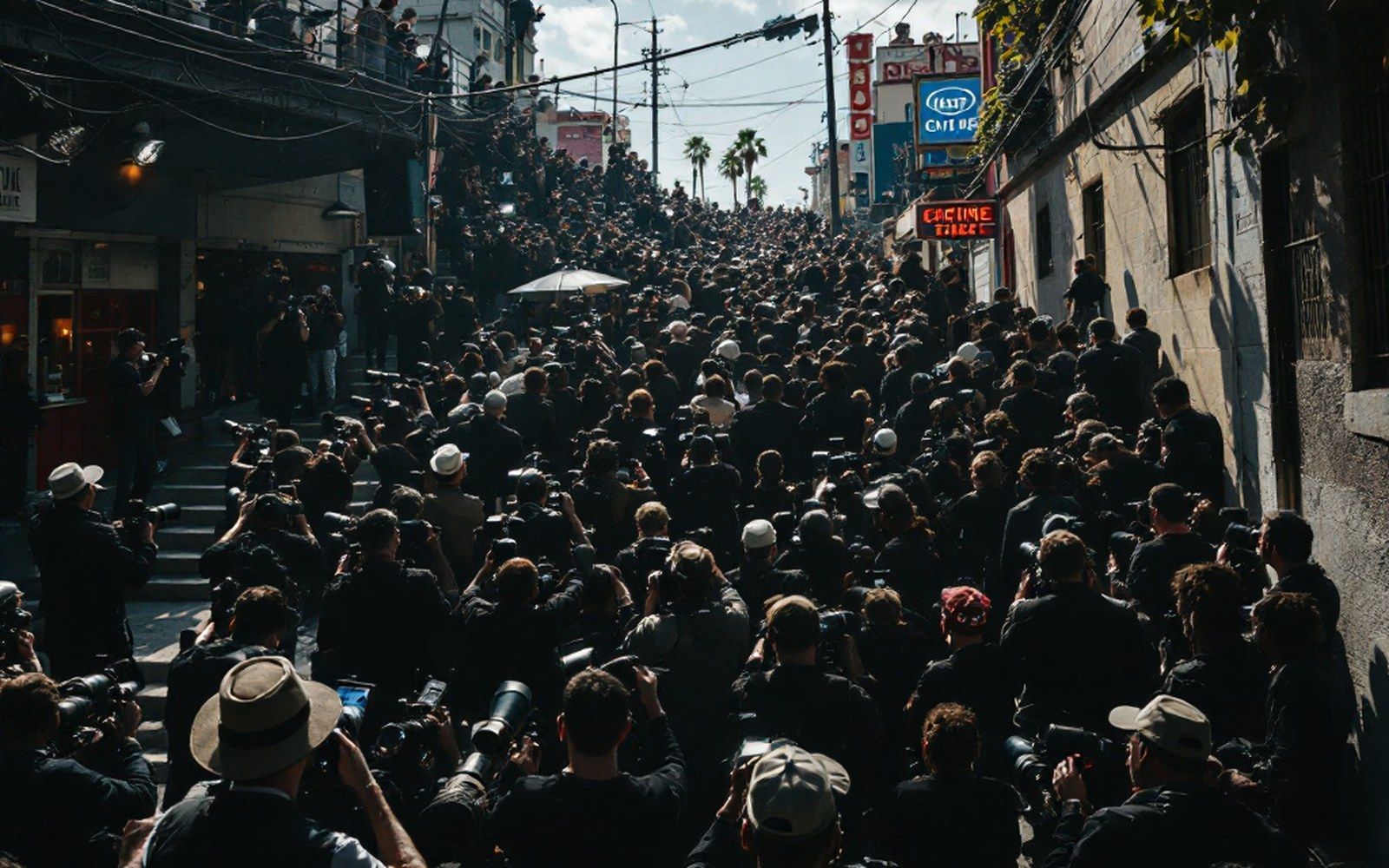
Lynch presented Mulholland Drive at the Cannes Film Festival in May 2001 in competition. The jury awarded him the Best Director prize jointly — he shared it with Joel Coen, who was there for The Man Who Wasn't There. A shared prize is not a lesser one, but it is worth noting: the film that would eventually be called one of the greatest of the twenty-first century did not win the Palme d'Or. The jury saw something worth recognising in the direction and declined to go further.

The reviews that came out of Cannes were strong but not uniform. Critics who had followed Lynch through Lost Highway and The Straight Story knew how to sit with deliberate opacity; those who wanted resolution found the film frustrating in ways they could not entirely articulate. That split — between readers and resisters — ran through the wider release that autumn.
What changed the picture was time. The film accumulated readings rather than solutions. Naomi Watts's double performance, the architecture of the Club Silencio sequence, the question of which half of the film is dreaming the other — none of it collapsed into a single answer, and the refusal to collapse turned out to be the point. Critics who returned to it found more on the second viewing than the first, then more again. That pattern of expanding reward is exactly what canonical lists tend to reward.
02 The 2022 landing point
The Sight and Sound poll, conducted by the British Film Institute, is the most-watched barometer in serious film criticism. It runs every decade. In the 2022 edition, Mulholland Drive placed eighth overall, the highest-ranked film of the twenty-first century. That is a different claim from placing it at the top of all cinema, but it is not a modest one. The 1999 ABC pilot that never aired, completed with StudioCanal money, scored for an audience that never existed, had become the reference point for what the new century's films could be.
The Cannes prize was the first institutional signal. It said: the direction is worth attending to, the vision is coherent enough to recognise, even if the jury room could not agree to go all the way. The Sight and Sound result was the second signal, arriving with the weight of accumulated critical consensus behind it. Between those two moments lies twenty years of viewers watching it again.