A studio meeting conducted entirely about coffee
The Castigliane brothers reject an espresso and, by doing so, cast a film. It is the clearest thing the movie says about how decisions actually get made.
01 The scene that explains the industry
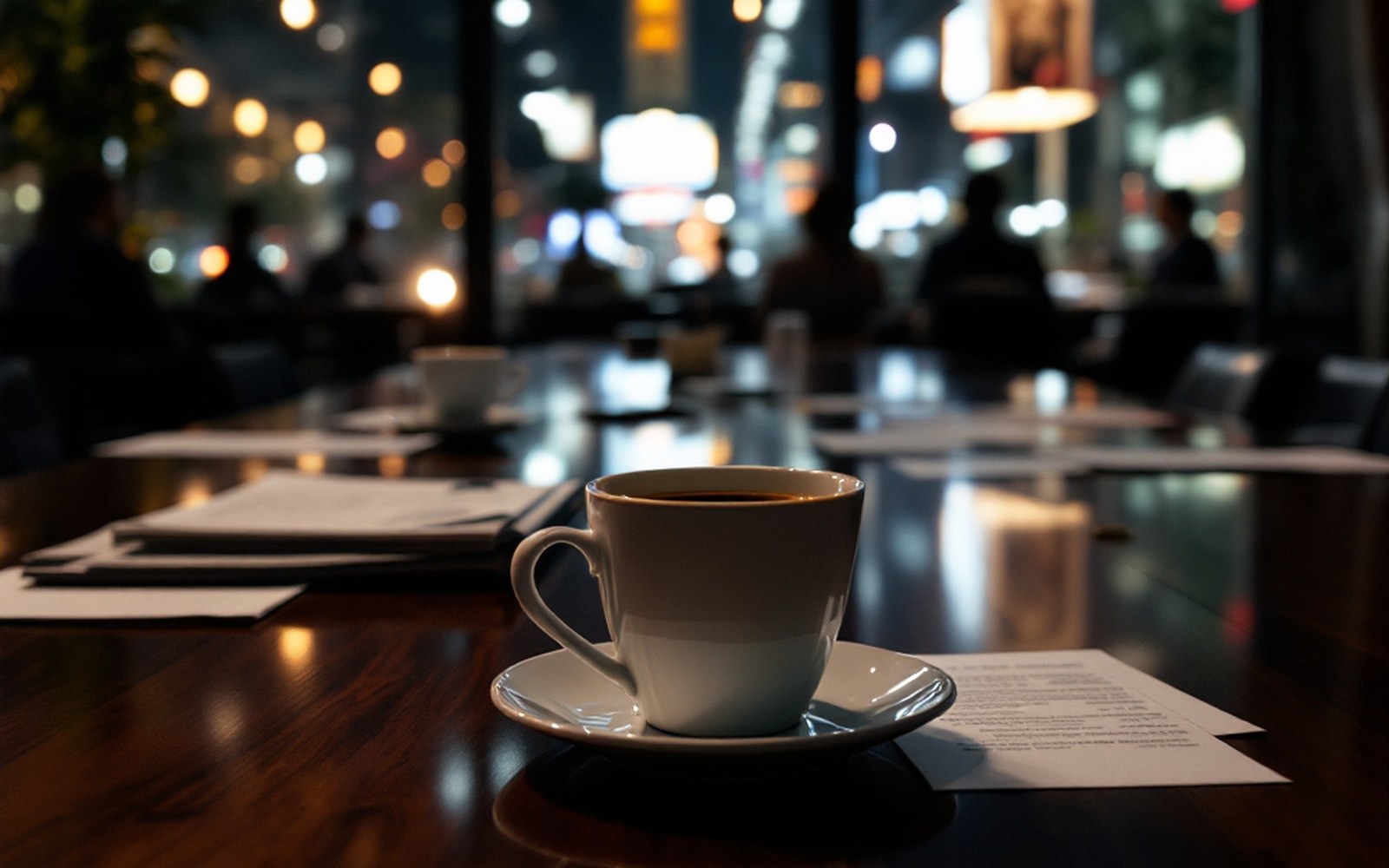
A director named Adam Kesher is in a studio meeting, and the men across the table from him are refusing his casting choice. They never say this directly. What they do instead is send over an espresso and watch how it is received. Luigi takes one sip and spits it out, and the matter is settled. And just like that, a conversation that was never really about coffee has told him everything he needs to know about the rest of his professional life.
The Castigliane brothers — Luigi and Vincenzo, the names never spoken in the scene itself but in the credits — are the clearest villains Lynch put on screen in a film that otherwise keeps its menace abstract and mobile. They do not threaten Adam Kesher with anything you could name. They have a fixer beside them, a quiet man called Mr Roque, who rarely blinks and says almost nothing. The brothers talk at Adam in Italian with a translator present, even though the film strongly implies they speak English perfectly well. The translator is not there to bridge a language gap. He is there to create distance, to slow Adam down, to make him feel like a foreigner in his own meeting.
The espresso is the scene's real argument. It is dense with what the film keeps returning to: the gap between surface transactions and the decisions that have already been made. Adam has been told he is casting his next picture. He has not been told he is casting it under instruction. The cup of coffee is the clarification. Try it again. This is how it works here. You will acquire the taste, or you will stop working, and both outcomes are equally fine with us.
02 An object with a career
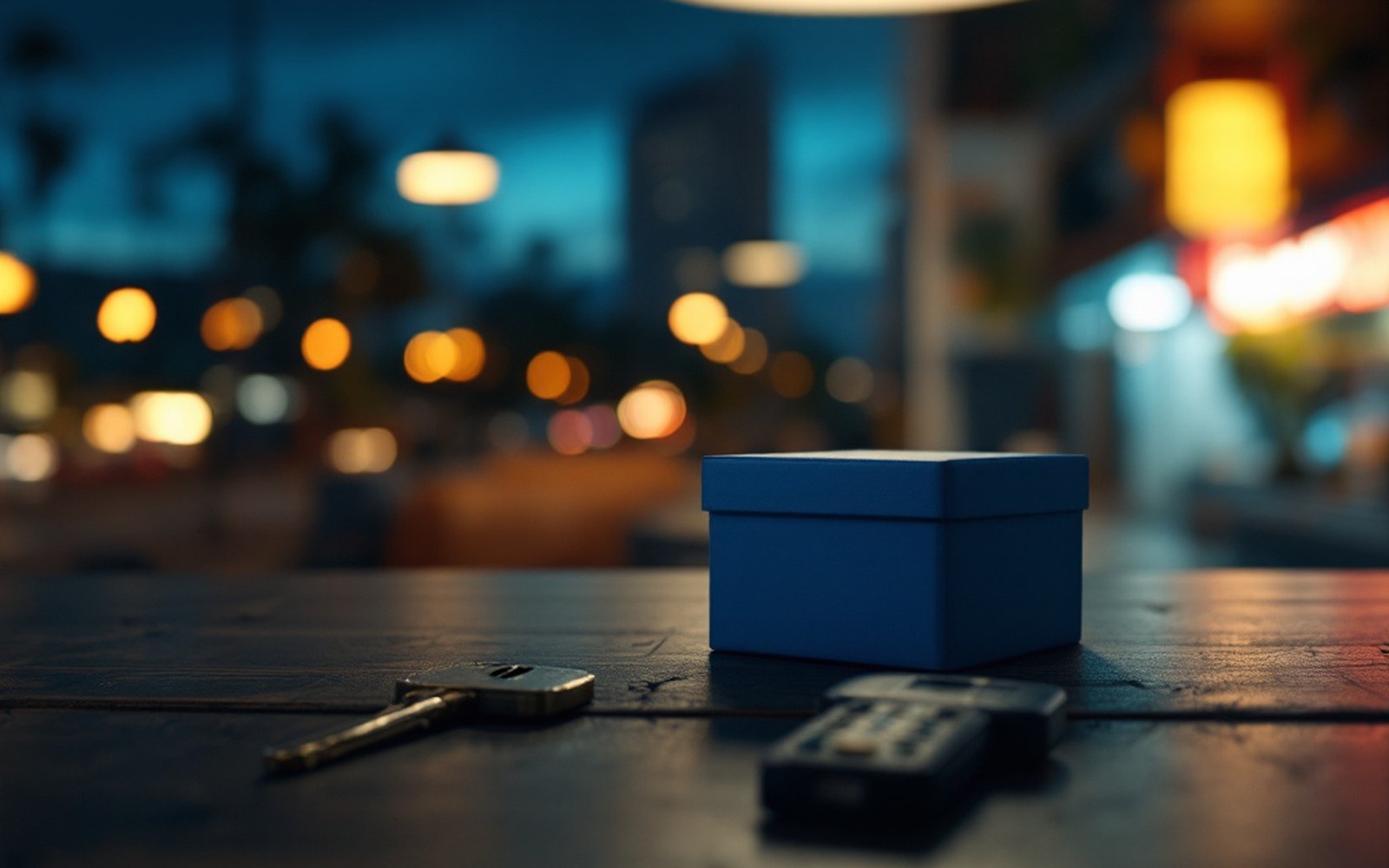
Lynch uses objects throughout the film as load-bearing devices — the blue box is the most extreme example, but the espresso is the most legible. It has no mystical valence, no second-half inversion, no dream logic attached to it. It means precisely what it appears to mean: power demonstrated through a trivial social gesture. The Castigliane brothers are not magical or surreal. They are a fairly accurate portrait of the kind of producer who never appears in a film's credits but determines everything about it.
Justin Theroux, who plays Adam Kesher, carries the scene with exactly the right mixture of contempt and dawning fear. He understands before the viewer does that the espresso refusal has cost him something. The blocking makes the point: the brothers sit, Adam stands, and still the geometry of the room makes clear who is immovable. When Adam finally knocks the table and leaves — a small, futile act of rebellion — the brothers do not react. That non-reaction is the scene's last sentence.
03 What Lynch originally built this into
The scene comes from the television pilot Lynch shot for ABC in 1999, and it survives the transition to the feature film almost entirely intact. Its function changed slightly in the edit: in the pilot structure it reads as serial-television villainy, a shadowy organisation running a series-length threat. In the film it reads as something more compressed and final — a system showing a single person how it operates, once, with no further explanation required. When StudioCanal funded the additional photography that completed the feature, this scene needed nothing added to it. It was already the right length to make its point and stop.
Sight and Sound critics and others who have written at length about the film's Hollywood-machine reading — the interpretation that the second half retroactively charges the first half with being an industry fantasy — tend to return to the Castigliane scene as the reading's ground floor. The dream logic does not have to carry the argument about power because this scene carries it plainly. Lynch made a film about what Los Angeles does to people who want to make films inside it, and he filmed it in Los Angeles, and he put the clearest statement of his thesis in a studio meeting, inside a cup of coffee that the protagonist was told to like twice.